
You will know many of his poems, even if you don't realise it. You'll have sung one (Auld Lang Syne) just a few weeks ago as you greeted the New Year. Other familiar poems and songs might include To a Mouse from which Of Mice and Men takes its title, My Love is like a Red, Red Rose, and Ae Fond Kiss.
The meal starts with the Selkirk Grace:
Some have meat and cannot eat,The menu will include typically Scottish food, probably starting with some cock-a-leekie soup or Scotch broth. The highlight of the evening though is the haggis as it is marched in by the chef led by a bagpiper. The host for the evening will then give the Address to a Haggis, hopefully adding to the ceremony of the occasion by plunging a small knife or sgian dubh into it as he says:
Some can eat that want it:
But we have meat and we can eat,
Sae let the Lord be thankit.
His knife see rustic Labour dight,
An' cut you up wi' ready sleight,
Trenching your gushing entrails bright,
Like ony ditch;
 I'll let you investigate for yourself what haggis is made from, but, be assured, (and this is coming from someone who was vegetarian for 10 years of her life) that haggis is delicious! It is served with neeps (mashed swedes or turnips) and tatties (mashed potatoes). For dessert, cranachan, clootie dumpling or oatcakes and cheese might be served, followed by the national drink, whisky.
The evening continues with speeches - The Immortal Memory remembering Burns' life or work and the Toast to the Lassies and their Reply which are amusing gently poking fun at the other gender. There will be singing of his songs and recitations of his poetry and perhaps some ceilidh dancing, before a final rendition of Auld Lyne Syne. It's a great evening, so if you are ever over here at this time of year, do let me know and I'll make sure that you get to one!
(I also realised while typing this that it is exactly 15 years since our house burnt down - I remember being a little amused that this had happened on Burns' Night! Maybe that is a story for another day!)
Contented wi' little and cantie wi' mair,
Whene'er I forgather wi' Sorrow and Care,
I gie them a skelp, as they're creepin alang,
Wi' a cog o' guid swats and an auld Scottish sang.
Contented wi' Little
Robert Burns, the Bard (January 25, 1759 – July 21, 1796


With lots of prayers for 2007.
Should auld acquaintance be forgot,Words: Robert Burns, Scottish poet (1759-1796)
and never brought to mind ?
Should auld acquaintance be forgot,
and auld lang syne ?
For auld lang syne, my dear,
for auld lang syne,
we’ll tak a cup o’ kindness yet,
for auld lang syne.
And surely ye’ll be your pint-stowp !
And surely I’ll be mine !
And we’ll tak a cup o’ kindness yet,
for auld lang syne.
Tune: Traditional Scottish melody
Translation
Labels: Scotland
The landmarks shown are:
Falkirk Wheel
Forth Road and Rail Bridges
Edinburgh (the Castle, Princes Street, Iceskating in Princes Street Gardens, the Mound)
Loch Ness (complete with Monster and Urquhart Castle)
Monarch of the Glen
Glenfinnan Viaduct (as seen in the Harry Potter films)
Eilean Donan Castle
Glasgow (Glasgow Royal Concert Hall, City Chambers, George Square)
Labels: Christmas, miscellaneous, Scotland

The reason behind Exclusive Psalmody (which also includes the singing of other songs in Scripture) comes down to the Puritan concept of "Purity of Worship" and the Regulative Principle, which is stated in the Westminster Confession of Faith as:
But the acceptable way of worshipping the true God is instituted by himself, and so limited by his own revealed will, that he may not be worshipped according to the imaginations and devices of men, or the suggestions of Satan, under any visible representation, or any other way not prescribed in the Holy Scripture.
 I have found many blessings in singing the psalms. I love singing them, knowing that these are the same words sung for thousands of years by God's people and even by Jesus himself. All human emotions are expressed in the psalms, from anger at God and rage at feeling abandoned by him to rejoicing and praise. Sometimes these are emotions and ideas we find hard to share with each other, never mind in singing to God, yet they are here in God's word, inspired by the Spirit, and are clearly designed by him for singing. Through singing the psalms in church and in my own quiet times, they have been hidden away in my heart so that without me even noticing that I have memorised huge portions of Scripture.
If you are interested in listening, I have found a few links for you to experience psalm singing. (If you are really brave, you could try the Gaelic psalm singing. It divides people like Marmite - you'll either love it or hate it!) Psalm singing has to be sung in 4 part harmony to be heard at its best. Often in church this will happen spontaneously which really does make a joyful song! If your psalmody tastebuds have been awakened, I can recommend Discovery, the DVD of a recent Festival of Psalms - you might even spot someone you know!
Psalm 24:7-10 to the tune St George
Psalm 46:1-5 to Stroudwater
Psalm 65:1-6 to Dunfermline
Psalm 69 to Stornoway (Gaelic)
Psalm 117 to Regents Square
Psalm 103 to Coleshill (Gaelic)
Psalm 104 to Kilmarnock (Gaelic)
Psalm 121 to French
Let the word of Christ dwell in you richly, teaching and admonishing one another in all wisdom, singing psalms and hymns and spiritual songs, with thankfulness in your hearts to God.
Colossians 3:16

Ebenezer Erskine, Scottish minister (1680-1754)
Labels: faith, quotations, Scotland

Pure is a six week course aimed at university students and looks at different issues surrounding relationships. It does not aim to give a list of things you can and can't get away with, but instead starts with what God has revealed in the Bible and then looks at how this should be applied in our lives and relationships.
I haven't been to the course myself or read the book, but I've had a look at some of the teaching materials. The course looks at
- The creation of male and female, both in the image of God
- Roles of men and women in the Bible and in our society
- The Fall and the beginning of the Battle of the Sexes
- The redemption that comes from Christ
- Treating each other as brothers and sisters in Christ
- Why Christians shouldn't date non-believers
- Why sexual relations are only legitimate within the context of marriage
- The blessings of both marriage and singleness
- The forgiveness that comes from Jesus when we fall short of all this
Homosexuality: The Bible is clear on this. Sexual relations are only legitimate within the context of marriage as God has ordained it – that is, between a man and a woman. Just as those with a heterosexual orientation should not practice sex outside of marriage, the same goes for those who experience homosexual attraction.
The university has a clear commitment to ensuring that our students and staff are treated and treat each other with dignity and respect. It also attaches considerable importance to the values of free speech and open debate. In this case, the university has looked into the matter, in parallel with an enquiry by the Students Association (EUSA), and has decided that the course is contradictory to our Equality and Diversity values. It was decided that it is not appropriate for this course to run on university or EUSA premises.
How can a young man keep his way pure?
By guarding it according to your word.
Psalm 119:9

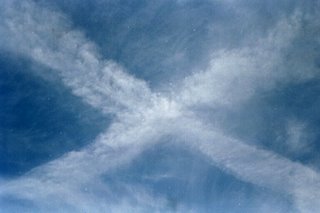
Another legend tells of the Pictish king Angus fighting against the English in the eighth or nineth century. It is said that he looked up into the sky and saw a Saltire in the clouds. As tradition tells us that Andrew was martyred on a diagonal cross, King Angus saw this as a sign that Andrew was protecting them and then resolved to make him Scotland's patron saint if the battle was won.
Andrew's position as patron saint was confirmed in 1320 in the Declaration of Arbroath, the declaration of Scottish independence after the Scots were lead to victory over the English by Robert the Bruce:
The high qualities and deserts of these people, were they not otherwise manifest, gain glory enough from this: that the King of kings and Lord of lords, our Lord Jesus Christ, after His Passion and Resurrection, called them, even though settled in the uttermost parts of the earth, almost the first to His most holy faith. Nor would he have them confirmed in that faith by merely anyone but by the first of His Apostles - by calling, though second or third in rank - the most gentle Saint Andrew, the Blessed Peter's brother, and desired him to keep them under his protection as their patron forever...The Most Holy Fathers your predecessors gave careful heed to these things and bestowed many favours and numerous privileges on this same kingdom and people, as being the special charge of the Blessed Peter's brother.
Other than a few sentences, there is little else said about Andrew throughout the Bible. Tradition teaches that after the resurrection, he went to Greece and Asia Minor to
 share the Gospel. Perhaps then it is in the little that is recorded that we see his most important action.
Andrew, after only a little time with Jesus, recognised him for who he was and went home to share this truth with his brother so that he could also know Jesus. Andrew must have been listening to the teaching of John the Baptist, eagerly expecting the Messiah to come, and was ready to recognise Jesus when he began his ministry. His example is a reminder to us to share our faith and knowledge of God freely with others. In Andrew's case, he brought Simon Peter to Christ, with Peter becoming one of Jesus' closest disciples and the main disciple to the Jewish people. Andrew's initial influence should not be forgotten as we praise God for all that Peter did.
Window depicting St Andrew, Monimail Parish Church, Fife.
(Crown Copyright: RCAHMS, www.rcahms.gov.uk)
While walking by the Sea of Galilee, he saw two brothers, Simon (who is called Peter) and Andrew his brother, casting a net into the sea, for they were fishermen. And he said to them, "Follow me, and I will make you fishers of men." Immediately they left their nets and followed him.
Matthew 4:18-20
This is where our desire for learning comes from and where our learning has its purpose: to know God more and so to fear and glorify him. Taking prime importance in our lives, we should be seeking to read our Bibles, to learn more from Scripture, to pray and to have fellowship with God's people. But the godly men who set up these universities did not want to cloister themselves away to learn about God, but to put this knowledge into practice for the good of the people.
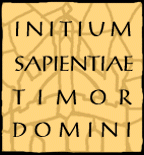
In the case of my own university, a need for "a more educated laity, given the shortage of doctors, lawyers and schoolmasters in the country" was recognised. Its teaching "embraced all the known branches of learning Arts, Theology, and Canon and Civil Law" and was the place of the first Chair of Medicine in the English-speaking world.
Even as I studied for my degree and now study for postgraduate exams, I find it so refreshing to learn new things. In the last few years, I have tried to learn new languages, have completed a course in Christian theology, learned the basics of Art History and now plod away at trying to play the piano!

Constantly learning stretches my brain in new directions so, rather than tiring me out, it exercises and relaxes me. I hope that I shall never stop trying to learn, but that I shall take every opportunity to try new experiences and to learn more. I have had so much fun and had so much more enjoyment from pursuing knowledge outside of prescribed study and am thankful for the small amount of wisdom I can gain from that.
The fear of the LORD is the beginning of wisdom;
all those who practice it have a good understanding.
His praise endures forever!
Psalm 111:10
Labels: carnival of beauty, faith, history, Scotland